2025 Driver Education Round 3
How One Crash Changed My Definition of Impaired Driving
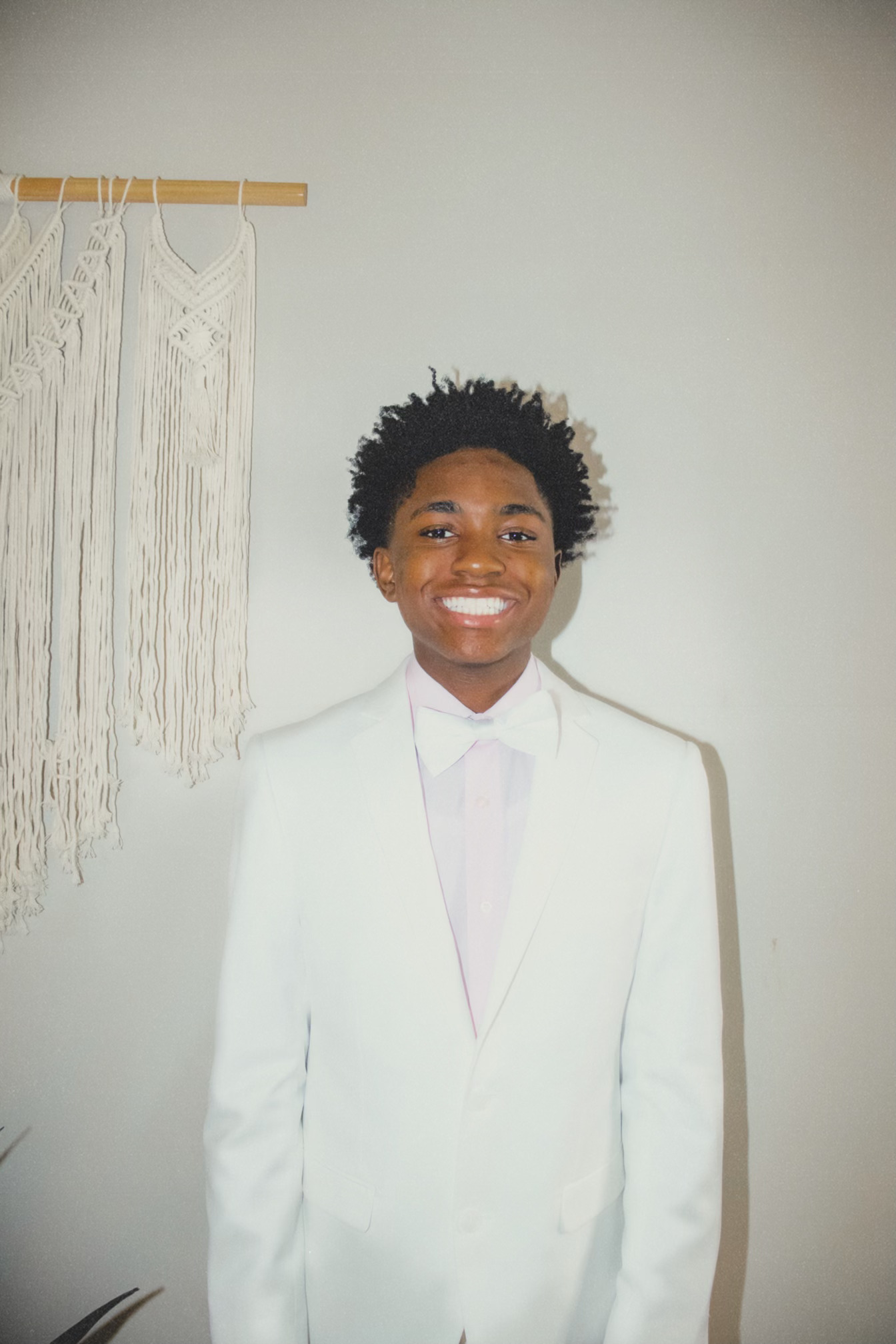
Jahsean I Meikle
Jonesboro, Georgia
Eight seconds. Eight seconds was all my best friend Marty had to get ready when a distracted SUV ran a red light and t-boned his passenger side while I sat helpless in the back seat with a compound fracture. He exited the car with a broken collarbone and three stitches over his eye. The driver? Scrolling through Instagram, impaired. Not alcohol, not drugs - impaired, nonetheless. That's when I learned what it meant to be an impaired driver: any circumstance that steals someone's judgment when they should've known better.
That's how everything I knew about impaired driving changed that night. The perception is that drunk driving and drugged driving equal impaired driving. However, statistics show that they're broader and more frequent than anyone knows. But the lesson I learned in the moment was broader and more frequently understated. Distraction. Fatigue. Emotional devastation. These are invisible impairments that no one cares to associate as such, which is why, one day, a parent who's had no sleep after working 16 hours is impaired. A teen who checks their phone during a red light is impaired. An adult whose received devastating news and is crying while driving is impaired. We don't call it that - we call it a mistake. But mistakes kill people - mistakes become patterns of predictability when we don't acknowledge what's at the root of the problem.
It was not seeing my friend's recovery from injuries that impacted me most; it was seeing his mother cry for three weeks straight. It was acknowledging that eight seconds changed two families forever, it ruined his senior year, and sullied what any reasonable person could advocate as a safe space. But it devastated me even more that I was one of those drivers who was distracted. I checked my phone at the red light. I justified myself because I'm "careful." I'm not careful enough. We're not careful enough until it's someone we know, and we must all reflect on the society we allowed to form around us to make that kind of behavior seem acceptable in the first place.
That's when I realized there was a bigger picture: awareness campaigns fail. Ninety-seven percent of teenagers understand that texting and driving is bad for them. Forty-three percent engage in the behavior, anyway. This is called a knowing-doing gap, and most driver safety education fails to embrace what's going on because they think it's substance-related impaired driving when it's not; it's a barrier issue located in FOMO and social connectedness; it's the ability to connect more with someone instead of thinking abstractly of danger to themselves. Unless something happens, they think they'll be fine - but by telling someone not to do something, empowered people tend to do it anyway because they see a gap between their reality and someone else's admonition.
Driver safety education that actually works to prevent impaired driving needs to work in three main ways.
First, it needs to normalize accountability without shame. I started an "Accountability Partners" program on my basketball team where teammates non-judgmentally acknowledge risky behavior they've witnessed, NO SHAME but PROTECTION! If one teammate thinks he may be tired, he's going to say, "I value you too much to let you do this." This works because it acknowledges what's at stake, the social discomfort of approaching a friend about this, and turns it into peer protection instead of peer pressure. The difference is transformative - it's aspirational instead of punitive.
Second, it needs to make consequences real instead of theoretical. I'm creating "The Cost Calculator", a digital projection for teens who need to see what impaired driving really costs them, real-life financial, emotional, and penal costs, not just what you could do, but hospital bills, insurance hikes, charges against them, scholarships denied, all before they even step foot in court for years down the line. Teens care about tangible losses they can grasp. It may turn the potential danger into "I have too much to lose - my scholarship, my independence," but if it prevents substance-related accidents by intervening in their community, then it's worth making.
Finally, it needs to give the benefit of good-intentioned access to good choices when willpower can't get them through. I'm working with local rideshare services to donate reasonable rides for those teens who know they're too tired/overwhelmed/distracted, or impaired to safely operate a vehicle. Even when good-intentioned thoughts take over, they need outside access. Preventative action acknowledges that the community won't always have structures in place when well-intentioned resources fall through.
All three solutions come back to what DMVedu champions: there's so much more than substance-related impaired driving. There's stolen judgment from someone who shouldn't drive based on fatigue or distraction, or emotion, and REAL driver safety education teaches this before someone makes a fatal choice. Real driver safety education champions life-saving considerations like Marty by informing teens both with knowledge and systems for implementation.
Eight seconds changed my life forever, and now I'm going to use the rest of my time to ensure it changes far fewer lives along the way, and that's what it means to champion impaired driving. That's what real driver education does!
That's how everything I knew about impaired driving changed that night. The perception is that drunk driving and drugged driving equal impaired driving. However, statistics show that they're broader and more frequent than anyone knows. But the lesson I learned in the moment was broader and more frequently understated. Distraction. Fatigue. Emotional devastation. These are invisible impairments that no one cares to associate as such, which is why, one day, a parent who's had no sleep after working 16 hours is impaired. A teen who checks their phone during a red light is impaired. An adult whose received devastating news and is crying while driving is impaired. We don't call it that - we call it a mistake. But mistakes kill people - mistakes become patterns of predictability when we don't acknowledge what's at the root of the problem.
It was not seeing my friend's recovery from injuries that impacted me most; it was seeing his mother cry for three weeks straight. It was acknowledging that eight seconds changed two families forever, it ruined his senior year, and sullied what any reasonable person could advocate as a safe space. But it devastated me even more that I was one of those drivers who was distracted. I checked my phone at the red light. I justified myself because I'm "careful." I'm not careful enough. We're not careful enough until it's someone we know, and we must all reflect on the society we allowed to form around us to make that kind of behavior seem acceptable in the first place.
That's when I realized there was a bigger picture: awareness campaigns fail. Ninety-seven percent of teenagers understand that texting and driving is bad for them. Forty-three percent engage in the behavior, anyway. This is called a knowing-doing gap, and most driver safety education fails to embrace what's going on because they think it's substance-related impaired driving when it's not; it's a barrier issue located in FOMO and social connectedness; it's the ability to connect more with someone instead of thinking abstractly of danger to themselves. Unless something happens, they think they'll be fine - but by telling someone not to do something, empowered people tend to do it anyway because they see a gap between their reality and someone else's admonition.
Driver safety education that actually works to prevent impaired driving needs to work in three main ways.
First, it needs to normalize accountability without shame. I started an "Accountability Partners" program on my basketball team where teammates non-judgmentally acknowledge risky behavior they've witnessed, NO SHAME but PROTECTION! If one teammate thinks he may be tired, he's going to say, "I value you too much to let you do this." This works because it acknowledges what's at stake, the social discomfort of approaching a friend about this, and turns it into peer protection instead of peer pressure. The difference is transformative - it's aspirational instead of punitive.
Second, it needs to make consequences real instead of theoretical. I'm creating "The Cost Calculator", a digital projection for teens who need to see what impaired driving really costs them, real-life financial, emotional, and penal costs, not just what you could do, but hospital bills, insurance hikes, charges against them, scholarships denied, all before they even step foot in court for years down the line. Teens care about tangible losses they can grasp. It may turn the potential danger into "I have too much to lose - my scholarship, my independence," but if it prevents substance-related accidents by intervening in their community, then it's worth making.
Finally, it needs to give the benefit of good-intentioned access to good choices when willpower can't get them through. I'm working with local rideshare services to donate reasonable rides for those teens who know they're too tired/overwhelmed/distracted, or impaired to safely operate a vehicle. Even when good-intentioned thoughts take over, they need outside access. Preventative action acknowledges that the community won't always have structures in place when well-intentioned resources fall through.
All three solutions come back to what DMVedu champions: there's so much more than substance-related impaired driving. There's stolen judgment from someone who shouldn't drive based on fatigue or distraction, or emotion, and REAL driver safety education teaches this before someone makes a fatal choice. Real driver safety education champions life-saving considerations like Marty by informing teens both with knowledge and systems for implementation.
Eight seconds changed my life forever, and now I'm going to use the rest of my time to ensure it changes far fewer lives along the way, and that's what it means to champion impaired driving. That's what real driver education does!
Content Disclaimer:
Essays are contributed by users and represent their individual perspectives, not those of this website.



3 votes
An accident that made me aware that also time and impatience can be impairement
Karin Deutsch


