2025 Driver Education Round 3
Maybe You Should Just Listen
Mason D Hill
Eastampton, New Jersey
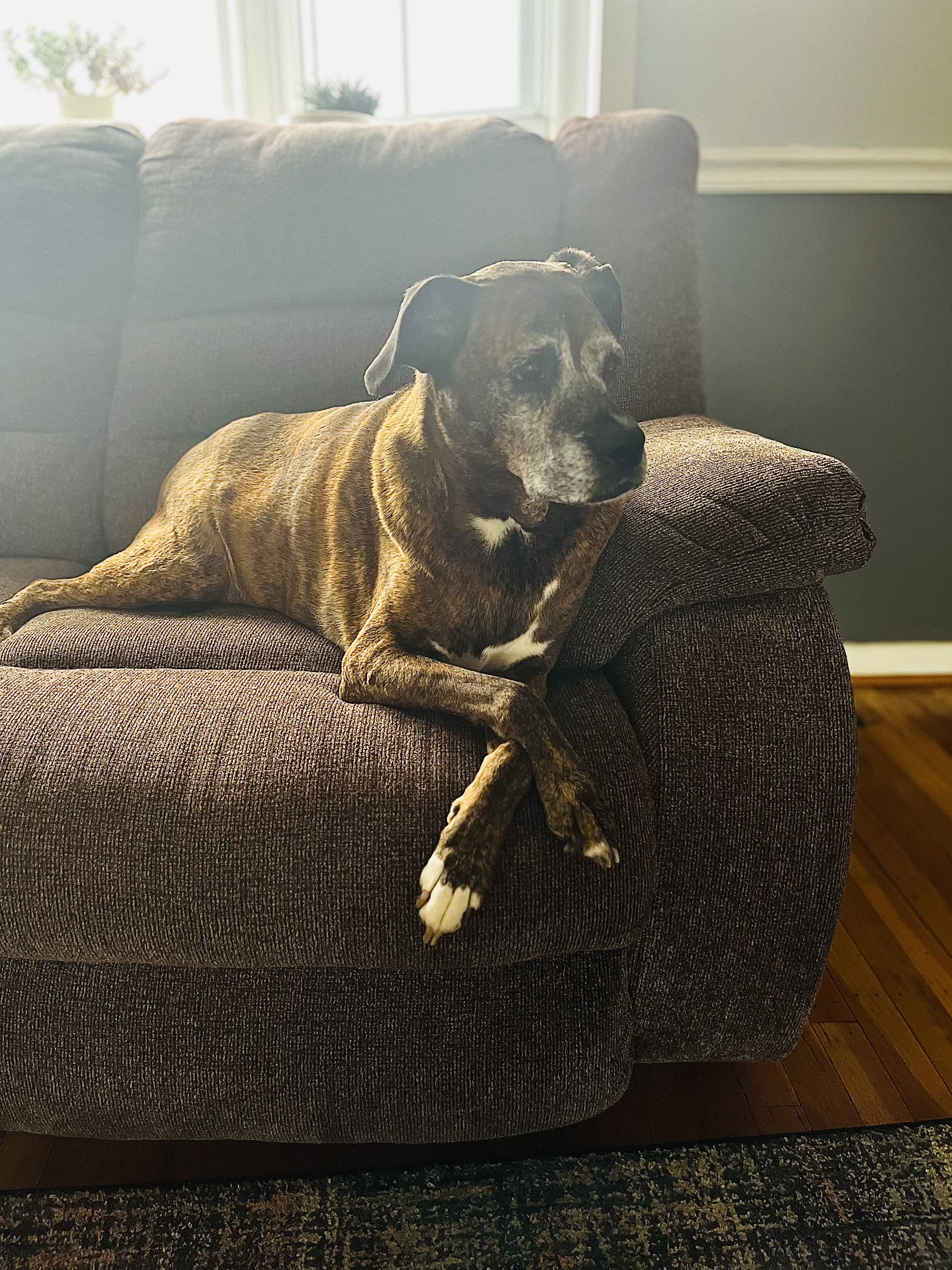
I used to think most warnings about driving were exaggerated, something adults repeated because they had nothing better to say. “Don’t look at your phone.” “Slow down.” “Pay attention.” I understood the rules, but I didn’t always feel the weight behind them. That all changed the day a distracted driver hit our dog, Charlie. It was the kind of moment that stays with you, not because it was dramatic or loud, but because of how quickly it happened and how easily it could have been prevented. That was the day I realized why driver education matters so much, and why people tell you to listen long before you think you need to.
It was a late afternoon in early summer, one of those warm days where everything feels calm. My family was outside, and Charlie, our dog who loved people more than anything, was lying in the yard. Charlie never wandered far; she stayed close, usually rolling onto her back whenever someone walked by, waiting for attention. At some point, a car turned onto our street. We barely noticed it at first. It wasn’t speeding. It wasn’t swerving. It looked completely normal. But what we didn’t see, until it was too late, was the driver holding their phone up above the steering wheel, eyes glued to the screen instead of the road.
In the two seconds the driver looked down to read a text, Charlie trotted a few steps toward the sidewalk, probably expecting a friendly greeting like she always did. The driver didn’t see her. The car didn’t slow down. And before anyone could shout or react, the car clipped her.
The sound wasn’t dramatic. It wasn’t like the movies where everything screeches to a stop. It was small, almost too small for the damage it caused. Charlie yelped and tumbled to the side, and the driver slammed the brakes only after looking up from their phone. That tiny moment of distraction, barely long enough to blink, was enough to change everything.
We rushed to Charlie, who thankfully survived, but she was hurt badly enough that the next few weeks were filled with vet appointments, pain medicine, and a miserable looking dog who didn’t understand why she couldn’t walk normally. The driver kept repeating the same phrase over and over, “I only looked away for a second.”
And that’s exactly the problem.
That was the moment I understood, on a personal and emotional level, why driver education is so important. It’s not just to teach people how to operate a car; it’s to teach them the responsibility of controlling something that can destroy a life in a split second. Driver education helps new drivers understand how serious every decision behind the wheel really is. You learn about blind spots, reaction time, stopping distance, and the dangers of distractions, but none of it truly hits you until you see what happens when someone ignores those lessons.
Driving related deaths happen for many reasons, speeding, texting, drinking, fatigue, and simple carelessness. But they share one thing in common, almost all of them are preventable. To reduce these tragedies, we need stronger driver education programs that focus on real life scenarios and the emotional weight of the decisions drivers make. It’s not enough to memorize the rules; people need to understand why the rules exist. Laws also need to be enforced consistently so that people recognize that reckless driving has real consequences. Campaigns against distracted driving help too, especially those that show what happens when someone says, “It’ll only take a second.”
Seeing Charlie get hit changed the way I think about driving altogether. Before that day, I had seen friends grab their phones to check a notification or switch songs without thinking twice. I had seen adults roll through stop signs because “no one was coming,” and I had watched people tailgate because they were impatient. These moments felt small, even normal. But when you’ve lived through the consequences of someone else’s “small moment,” you start to see things differently.
To be a safer driver myself, I know I need to commit to better habits, not just because they keep me safe, but because they protect everyone around me. I can put my phone out of reach, buckle my seatbelt every time, and stay alert to the mistakes other drivers might make. I can refuse to drive when I’m tired or upset, and I can speak up when someone else is being careless behind the wheel. Part of being responsible is helping others stay responsible too, even when it’s uncomfortable.
What happened to Charlie could have been avoided entirely if the driver had listened to the warnings they had surely heard a hundred times. And that’s why this story matters. It’s easy to treat safety advice like background noise, something meant for other people or dramatic situations you assume will never involve you. But sometimes life gives you a moment that forces you to pay attention. Sometimes, you wish the person responsible had listened before it was too late.
It was a late afternoon in early summer, one of those warm days where everything feels calm. My family was outside, and Charlie, our dog who loved people more than anything, was lying in the yard. Charlie never wandered far; she stayed close, usually rolling onto her back whenever someone walked by, waiting for attention. At some point, a car turned onto our street. We barely noticed it at first. It wasn’t speeding. It wasn’t swerving. It looked completely normal. But what we didn’t see, until it was too late, was the driver holding their phone up above the steering wheel, eyes glued to the screen instead of the road.
In the two seconds the driver looked down to read a text, Charlie trotted a few steps toward the sidewalk, probably expecting a friendly greeting like she always did. The driver didn’t see her. The car didn’t slow down. And before anyone could shout or react, the car clipped her.
The sound wasn’t dramatic. It wasn’t like the movies where everything screeches to a stop. It was small, almost too small for the damage it caused. Charlie yelped and tumbled to the side, and the driver slammed the brakes only after looking up from their phone. That tiny moment of distraction, barely long enough to blink, was enough to change everything.
We rushed to Charlie, who thankfully survived, but she was hurt badly enough that the next few weeks were filled with vet appointments, pain medicine, and a miserable looking dog who didn’t understand why she couldn’t walk normally. The driver kept repeating the same phrase over and over, “I only looked away for a second.”
And that’s exactly the problem.
That was the moment I understood, on a personal and emotional level, why driver education is so important. It’s not just to teach people how to operate a car; it’s to teach them the responsibility of controlling something that can destroy a life in a split second. Driver education helps new drivers understand how serious every decision behind the wheel really is. You learn about blind spots, reaction time, stopping distance, and the dangers of distractions, but none of it truly hits you until you see what happens when someone ignores those lessons.
Driving related deaths happen for many reasons, speeding, texting, drinking, fatigue, and simple carelessness. But they share one thing in common, almost all of them are preventable. To reduce these tragedies, we need stronger driver education programs that focus on real life scenarios and the emotional weight of the decisions drivers make. It’s not enough to memorize the rules; people need to understand why the rules exist. Laws also need to be enforced consistently so that people recognize that reckless driving has real consequences. Campaigns against distracted driving help too, especially those that show what happens when someone says, “It’ll only take a second.”
Seeing Charlie get hit changed the way I think about driving altogether. Before that day, I had seen friends grab their phones to check a notification or switch songs without thinking twice. I had seen adults roll through stop signs because “no one was coming,” and I had watched people tailgate because they were impatient. These moments felt small, even normal. But when you’ve lived through the consequences of someone else’s “small moment,” you start to see things differently.
To be a safer driver myself, I know I need to commit to better habits, not just because they keep me safe, but because they protect everyone around me. I can put my phone out of reach, buckle my seatbelt every time, and stay alert to the mistakes other drivers might make. I can refuse to drive when I’m tired or upset, and I can speak up when someone else is being careless behind the wheel. Part of being responsible is helping others stay responsible too, even when it’s uncomfortable.
What happened to Charlie could have been avoided entirely if the driver had listened to the warnings they had surely heard a hundred times. And that’s why this story matters. It’s easy to treat safety advice like background noise, something meant for other people or dramatic situations you assume will never involve you. But sometimes life gives you a moment that forces you to pay attention. Sometimes, you wish the person responsible had listened before it was too late.
Maybe you should just listen. Because one “second” can change everything.
Content Disclaimer:
Essays are contributed by users and represent their individual perspectives, not those of this website.
3 votes
An accident that made me aware that also time and impatience can be impairement
Karin Deutsch