2025 Driver Education Round 3
The Hand Of God In My Daily Driving Life
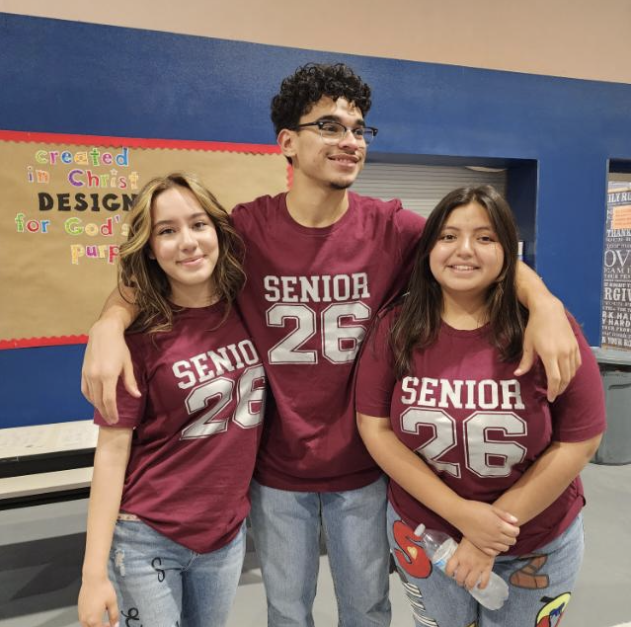
Isaac Nahbi-el Padilla
El Paso, Texas
by Isaac Padilla
Whenever I hear the phrase “impaired driving,” I don’t just think of numbers of deaths or classroom videos but that it brings back memories of glass, screams, and dizzying lights. Impaired driving, to me, means any condition or state whether its physical, mental, or emotional that weakens a someone’s ability to think clearly and act responsibly behind the wheel. It isn’t only about alcohol or drugs. It includes fatigue, texting, anger, or even distraction from friends. What makes impaired driving dangerous is that it’s invisible until it’s too late—people often think they’re “fine” to drive when, in reality, their judgment and reflexes are already slipping away.
I believe impaired driving is misunderstood because many drivers, even those who’ve completed driver’s education, underestimate how easily the mind can be impaired. A person might never touch alcohol but will still text while driving or drive on four hours of sleep, thinking, “It’s not as bad as drinking.” This is considered to be among the most hazardous types of false confidence on the road. Driver’s education imparts the knowledge of road signs, laws, and mechanics; however, it cannot evaluate pride or peer pressure. Yet, a lot of drivers, including even the trained ones, get into risky habits- they consider that intoxication is something that happens to other people, not to them.
And I know that when any driver isn’t sober, everyone else on the road is in danger too, not just that driver. I have been in four car accidents during my lifetime, and one of those accidents came very close to being my last day. I was seated next to my mom and another car ran through a red light at full speed, hitting us head-on on our side. The police later told us that the driver was intoxicated. Our car almost spun 360 degrees three entire times before it flipped over and rolled on its side. I remember the sound of screeching metal, the pounding of my heart that felt like it might pop out of my chest, and then silence. At some point during the chaos, I remember hearing myself praying and my mother arm tightly holding me from flying forward. I Thank God that we survived. My mother still insists she and I climbed out of the car by the hand of God with the help of people who were really angels who came rushing to get us out of the car safely without it tipping over. That night changed me forever. It was the moment I realized that one person’s bad choice can shatter another person’s life.
Ever since that accident, my perception of driving has completely changed. I have witnessed people yawning while driving, and when they have their phones on their laps, they are not aware of their surroundings, and that stresses me. One of the modern impairments is the combination of fatigue, distractions, and mobile usage. To some people, the impacts of these conditions are not as harmful as they can be for drunk drivers; no odors or slurs suggest the presence of impairment; but the risk is nevertheless the same. If you are sleepy, your reaction time will be as slow as that of a person under the influence of alcohol. With texting, you are being visually, manually, and mentally distracted at the same time. Every time someone claims “it’ll just take a second,” they put the lives of the people around them at risk, not just seconds.
Driver’s education and traffic safety courses are critical tools for breaking these dangerous misconceptions. Not only do they provide driving instruction but also the proper reasoning behind it. The courses that provide the most meaningful and the most realistic lessons are the ones that use crash pictures, victim testimonies, and simulations that allow students to sense the consequence of intoxication without the actual damage to their lives. I think that the most effective programs are those that require empathy as their main component. Once you get into the shoes of a person who has lost or almost lost his life due to a drunk driver, then safety becomes a personal goal rather than just a rule to be followed.
Driver's education is also about changing attitudes and a large part of that is an initial awareness. Instructors who are willing to share personal stories from their own lives or who invite guests from local law enforcement or hospital staff can put a face on the statistics. Some programs now offer virtual reality experiences that show what it is like to drive while distracted or while fatigued, making the lesson truly unforgettable. There is an impactful lesson there, as well—these experiences memorialize something, and there is power in that. They go beyond remembering facts—they go to the heart and conscience of what we want our young drivers to become.
I personally view my role in preventing impaired driving from two lenses: as a survivor and as an educator. I find myself in a position to use my experience to help others, speaking to classmates and friends and reminding them that being a "good driver" is irrelevant—being responsible is of the utmost importance. Like other conversations with friends where they downplay texting at a stop light or driving late after a long shift, I share with them that as my wife and I traveled in the crash, the other driver later told law enforcement that he was "just buzzed." What we now know is that he and his small decision almost took away my life. If my experience causes one single person to stop and think at least once, that is a victory.
Moreover, I have a plan to offer my services to the community and participate in driving safeness and awareness promotion program at school and in the neighborhood. As a person who is preparing to go to college and lead an adult’s life, I understand that when I drive, I have to master not only my life but also the lives of all those around me. My knowledge of road safety puts the onus on me to be the one who sets the standard and the one who ensures that the standard is maintained by others—that is, I will never drive when I am distracted, tired, or under the influence of anything, and I will never allow anyone else to do so if I can prevent it.
Drunk driving is not just a mistake but a calamity that is waiting to happen and can be justifyingly covered up easily. The predominant thought I took from my crash will always haunt me: with every driver, the fateful decision of who lives or dies at that moment depends when he or she turns the ignition on. I do think that through education, consciousness-raising, and personal responsibility, it is possible to influence the driving perception of people in a favorable direction. Thus, it can be transformed from an unremarkable activity to a divine one—a daily trust, focus, and care for others practice. I am a living example of this and I will never again take thankfulness for granted.
Content Disclaimer:
Essays are contributed by users and represent their individual perspectives, not those of this website.



3 votes
An accident that made me aware that also time and impatience can be impairement
Karin Deutsch


