2025 Driver Education Round 3
The Sound of Impact: How One Moment Changed Everything
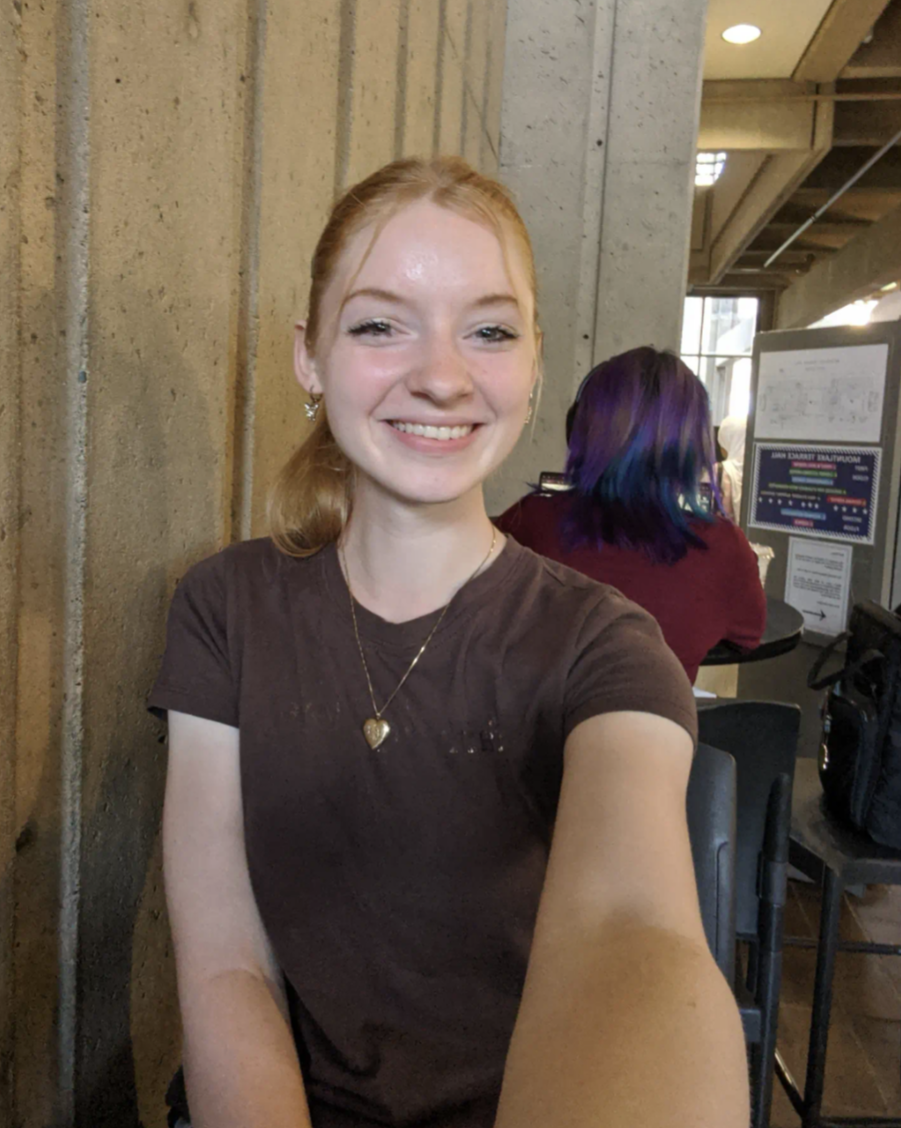
Brescia Johnson
Everett, Washington
I didn't have time to scream. One second I was driving normally down a residential street, the next second a car drove out of a driveway directly into my path. The collision happened so fast that my brain couldn't process it until after the airbags deployed and the sound of crunching metal had already faded. I was fine—shaken, but fine. My sister wasn't. Her face swelled up immediately, and later we'd learn that several of her teeth were broken. That image of her holding her face, the blood, the panic in her eyes—it's burned into my memory forever.
I was only sixteen, and hadn't even had my license for six months. And even though the accident wasn't my fault and there was nothing I could have done differently, it taught me the most important lesson about driving: you are never in complete control. That's what "impaired driving" really means to me now—it's any situation where your ability to respond to the unexpected is compromised. The other driver that day might have been distracted, might have been in a hurry, might have simply not looked. It doesn't matter. What matters is that in a split second, lives changed.
I think people misunderstand impaired driving because they picture the obvious scenarios—someone stumbling drunk to their car or lighting up a joint before getting behind the wheel. But impairment comes in so many forms that seem harmless until they're not. Fatigue makes your reaction time as slow as being legally drunk. Texting for just five seconds means driving the length of a football field blind. Even loud music can mask the sound of sirens or horns that could save your life. These impairments are everywhere, affecting drivers of all ages every single day, and most people don't even realize they're putting themselves and others at risk.
My own sister is a perfect example of how easy it is to minimize danger. She dreams of being a racecar driver, and sometimes she treats public roads like her personal track. She cranks her music up so loud I can feel the bass vibrating through my seat, and she drives well over the speed limit. Now, every time I drive with her in my car, she complains. "You drive like a grandma," she says. "Can you at least go the speed limit?" The irony is that I am going the speed limit—she's just so used to exceeding it that normal feels slow.
It's incredibly annoying. There are moments when I want to just press the gas pedal down and prove I can drive fast too. But then I remember her face after the accident, swollen and bloody, and I remember that I was following every rule that day and it still wasn't enough to prevent her from getting hurt. If I had been speeding, if I had been distracted, if I had been even slightly impaired in any way, she might not be here to complain about my driving at all. That thought keeps my foot steady on the pedal, no matter how much grief I get.
Driver's education and traffic safety courses can change attitudes by doing exactly what my accident did for me—making the consequences real. Statistics are just numbers until you're living them. Programs that show real crash footage, bring in survivors to share their stories, or simulate impaired driving through virtual reality make the danger tangible. What makes these programs truly effective is follow-up and reinforcement. One class isn't enough. We need ongoing reminders that every choice behind the wheel matters, because it's so easy to slip back into complacency when nothing bad has happened to you personally yet.
As for my role in preventing impaired driving, I realize now that I'm already playing it—even when it's uncomfortable. Every time I refuse to speed despite my sister's complaints, I'm modeling safe driving. Every time I put my phone in the glove compartment before starting the car, I'm showing friends that it can wait. I'm not perfect, and I'm still learning, but I understand now that safe driving isn't just about protecting myself. It's about protecting every person who shares the road with me and every passenger who trusts me with their life.
The truth is, I never wanted to learn this lesson the way I did. I would give anything to go back to that day and have the other driver look before driving out, to have my sister leave that road feeling fine, to not carry the weight of knowing how fragile we all are. But since I can't change the past, I can at least use what it taught me. I can drive carefully, consistently, and consciously. I can speak up when others don't. And maybe I can help someone else avoid learning this lesson the hard way.
Every time I get behind the wheel now, I think about that split second before impact—the moment when everything was still okay, when we were still safe. That moment is all we ever have. And it's worth protecting, no matter how slowly I have to drive to do it.
I was only sixteen, and hadn't even had my license for six months. And even though the accident wasn't my fault and there was nothing I could have done differently, it taught me the most important lesson about driving: you are never in complete control. That's what "impaired driving" really means to me now—it's any situation where your ability to respond to the unexpected is compromised. The other driver that day might have been distracted, might have been in a hurry, might have simply not looked. It doesn't matter. What matters is that in a split second, lives changed.
I think people misunderstand impaired driving because they picture the obvious scenarios—someone stumbling drunk to their car or lighting up a joint before getting behind the wheel. But impairment comes in so many forms that seem harmless until they're not. Fatigue makes your reaction time as slow as being legally drunk. Texting for just five seconds means driving the length of a football field blind. Even loud music can mask the sound of sirens or horns that could save your life. These impairments are everywhere, affecting drivers of all ages every single day, and most people don't even realize they're putting themselves and others at risk.
My own sister is a perfect example of how easy it is to minimize danger. She dreams of being a racecar driver, and sometimes she treats public roads like her personal track. She cranks her music up so loud I can feel the bass vibrating through my seat, and she drives well over the speed limit. Now, every time I drive with her in my car, she complains. "You drive like a grandma," she says. "Can you at least go the speed limit?" The irony is that I am going the speed limit—she's just so used to exceeding it that normal feels slow.
It's incredibly annoying. There are moments when I want to just press the gas pedal down and prove I can drive fast too. But then I remember her face after the accident, swollen and bloody, and I remember that I was following every rule that day and it still wasn't enough to prevent her from getting hurt. If I had been speeding, if I had been distracted, if I had been even slightly impaired in any way, she might not be here to complain about my driving at all. That thought keeps my foot steady on the pedal, no matter how much grief I get.
Driver's education and traffic safety courses can change attitudes by doing exactly what my accident did for me—making the consequences real. Statistics are just numbers until you're living them. Programs that show real crash footage, bring in survivors to share their stories, or simulate impaired driving through virtual reality make the danger tangible. What makes these programs truly effective is follow-up and reinforcement. One class isn't enough. We need ongoing reminders that every choice behind the wheel matters, because it's so easy to slip back into complacency when nothing bad has happened to you personally yet.
As for my role in preventing impaired driving, I realize now that I'm already playing it—even when it's uncomfortable. Every time I refuse to speed despite my sister's complaints, I'm modeling safe driving. Every time I put my phone in the glove compartment before starting the car, I'm showing friends that it can wait. I'm not perfect, and I'm still learning, but I understand now that safe driving isn't just about protecting myself. It's about protecting every person who shares the road with me and every passenger who trusts me with their life.
The truth is, I never wanted to learn this lesson the way I did. I would give anything to go back to that day and have the other driver look before driving out, to have my sister leave that road feeling fine, to not carry the weight of knowing how fragile we all are. But since I can't change the past, I can at least use what it taught me. I can drive carefully, consistently, and consciously. I can speak up when others don't. And maybe I can help someone else avoid learning this lesson the hard way.
Every time I get behind the wheel now, I think about that split second before impact—the moment when everything was still okay, when we were still safe. That moment is all we ever have. And it's worth protecting, no matter how slowly I have to drive to do it.
Content Disclaimer:
Essays are contributed by users and represent their individual perspectives, not those of this website.



3 votes
An accident that made me aware that also time and impatience can be impairement
Karin Deutsch


