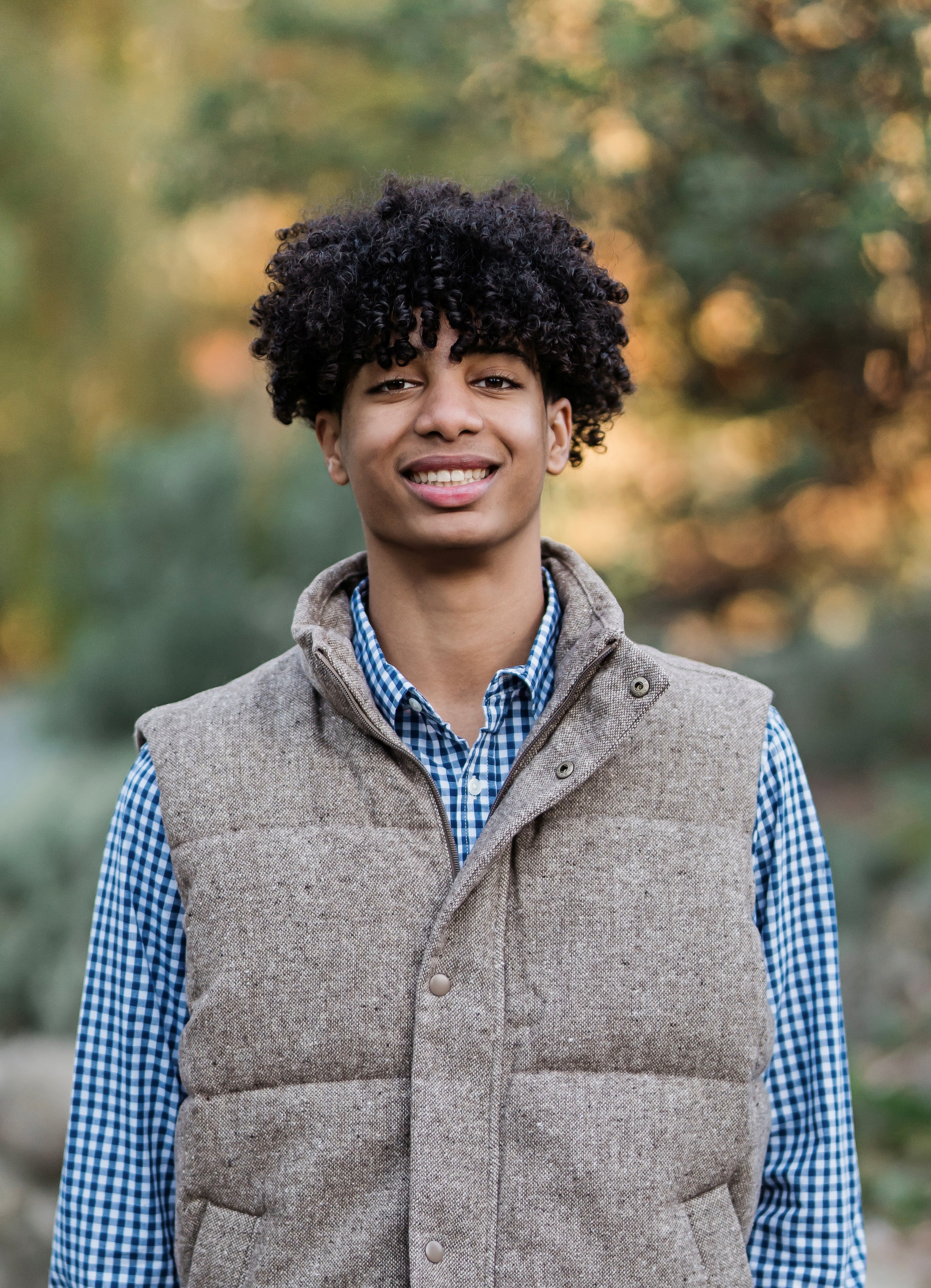
By: Jackson Thomas
"It wasn't my fault. It was raining. The roads were wet. If I had hit the brakes I would have skidded through the intersection. Driving through the light was the best option."
That was the script running through my head like a perfect loop of rationalization. That’s how I ended up in the California Highway Patrol's Start Smart program for minors after running a red light on a damp October night on my way home from practice. I clicked on the Zoom video and sat back with my arms crossed, convinced I was a victim of bad luck and strict policing. I walked out informed and keenly aware of my driving habits.
That class forced me to look at the reality of the truck I was operating. According to the National Safety Council, the odds of dying in a motor vehicle crash in the United States are 1 in 93. Compare that to the odds of dying in a plane crash, which are too small to even really worry about. We fear the wrong things. We fear sharks and airplanes, but we get into cars, which are statistically the most dangerous thing we do all day, without a second thought.
The biggest enemy in this war isn’t bad weather, like the rain I blamed that night. It’s us. Specifically, it’s our inability to define what "impaired" actually means.
To me, "impaired driving" isn't just about blowing a .08 on a breathalyzer. That’s the legal definition, sure. But the real definition is broader, messier, and much more dangerous. Impairment is any state where your brain isn't running at 100% capacity. It’s losing focus because you’re putting on make-up, eating a cheeseburger, digging for your commuter pass in the glovebox, holding a dog or flossing. It is the arrogance of thinking you can multitask while moving at 65 miles per hour.
This is where the misunderstanding happens. Ask a random teenager or even an adult about impaired driving, and they’ll talk about drinking. They have this binary switch in their heads: "I haven't been drinking, so I am OK." That logic is fatal. A driver who is perfectly sober but running on four hours of sleep is a weapon. A driver who is clean but reading a text message is blind. They don't see themselves as impaired because they aren't slurring their words, but their reaction times are shot.
We see this everywhere. The types of impairment on the road today are terrifying because they are so mundane. Alcohol is still a massive killer. The Insurance Institute for Highway Safety (IIHS) reports that despite laws, alcohol is a factor in 29% of all traffic fatalities. But look at the car next to you on the highway. Look at the driver looking down at their lap as they start to drift across the lane line.
Texting is the modern problem. We all think we can handle a "quick glance," but the math proves us wrong. Research from the Virginia Tech Transportation Institute found that engaging in visual-manual subtasks (like reaching for a phone, dialing, or texting) increases the risk of a crash by three times. When you look at a phone for five seconds at highway speeds, you drive the length of a football field blindfolded.
Then there is fatigue. Fatigue is a liar. It tells you that you’re fine, that you can just roll the window down or turn the music up. But biology doesn't care about your music volume. The AAA Foundation for Traffic Safety released a study showing that drivers who miss between one to two hours of the recommended seven hours of sleep in a 24-hour period nearly double their risk for a crash. If you miss two to three hours? The crash risk quadruples. You aren’t "just tired." You are operating with a brain that is shutting down.
I learned about rationalizing bad decisions when I ran that red light, but I learned about fatigue the hard way a year later.
It wasn't alcohol. I was coming back from a team dinner north of town. I was responsible. I was also running on very little sleep over two days of games and a grueling practice. I remember thinking I was fine. I just wanted my bed. I was on a two-lane country road, the kind with no streetlights, just the flash of yellow reflectors passing by.
I didn't fall asleep. Not fully. I just zoned out. One second I was in my lane, the next, there was a violent, guttural BRRRRRT sound vibrating through the truck. The rumble strips.
My tires were inches from the grass. If I had drifted the other way, into oncoming traffic? Game over. I jerked the wheel back, heart hammering against my ribs. I slowed down, gripping the steering wheel until my knuckles turned white. I wasn't drunk. I wasn't high. But I was totally incompetent to be behind that wheel. That sound of the vibration of the rumble strip is seared into my memory. It was my wake-up call.
I realized that being a good driver means you have the judgment to know when not to drive.
This is exactly where driver’s education and programs like Start Smart need to step up. Too often, traffic school feels like a punishment or a box to check. Memorize the signs, watch a gory video from the 90s, pass the test. But effective driver’s education is about behavior modification. It has to act as a reality check.
Good programs don't just tell you "don't drink and drive.” They show you the mechanics of a crash. They use simulators to prove to you that you cannot text and drive without crashing. When a student sits in a simulator and crashes while trying to send a quick emoji or snap, the lesson sticks. It moves from an abstract rule to a tangible failure. That embarrassment saves lives. It teaches defensive driving not as a skill, but as a survival instinct.
So, what is my role in this? I’m just one person. I can’t rewrite the laws. But I can be the friction in my friend group.
Peer pressure is usually painted as a negative force, but it can be used for good. I used to be afraid of making things awkward. Not anymore.
After that night on the rumble strips and my time in the Start Smart class, I stopped caring about being chill. If I see someone trying to drive impaired, whether they are buzzed, exhausted, or glued to their Snaps, I step in. I take keys, I call an Uber or I remind them to keep their phone in the back seat.
Sometimes people get mad. But I would rather have a friend who is angry at me today than a friend who is in a morgue tomorrow. My knowledge has translated into action and has changed the culture in my friend group.
We get behind the wheel and assume we are the main character in a movie where nothing bad happens to the hero. But the asphalt doesn't care about your GPA, your plans for the weekend, or how good of a driver you think you are. It only respects physics. Programs like Start Smart gave me the rules, but that red light and that near-miss gave me the resolve. I carry that diligence every time I start the engine. And honestly? I think we’d be a lot safer if everyone else took it that seriously, too.
Works Cited
- National Safety Council (NSC). Injury Facts: Odds of Dying.
- Insurance Institute for Highway Safety (IIHS). Fatality Facts: Alcohol.
- Virginia Tech Transportation Institute (VTTI). Driver Distraction in Commercial Vehicle Operations.
- AAA Foundation for Traffic Safety. Acute Sleep Deprivation and Risk of Motor Vehicle Crash.
Content Disclaimer:
Essays are contributed by users and represent their individual perspectives, not those of this website.



3 votes
An accident that made me aware that also time and impatience can be impairement
Karin Deutsch


