2025 Driver Education Round 3
What Sierra Leone Taught Me About Safe Driving
Dallin Bushman
Billings, Montana
To me, “impaired driving” means getting behind the wheel when something—whether it’s alcohol, drugs, texting, emotions, or just plain exhaustion—is blocking you from thinking clearly and reacting the way you should. Most people understand that drunk driving is dangerous, but a lot of folks, even those who completed driver’s ed, forget that impairment goes way beyond that. It isn’t just about what’s in your system. It’s about anything that keeps you from being fully present and responsible behind the wheel. I think people misunderstand it because they believe impairment only counts when they’re completely out of it. But the truth is, even a small distraction or a little tiredness can be enough to cause a serious accident.
Some of the most common types of impairment today are alcohol, drugs, texting, and fatigue. Texting is probably the biggest one for my generation. People tell themselves they can handle “just a quick reply,” but taking your eyes off the road for even a second can be the difference between life and death. Fatigue is another huge one that people underestimate. When you’re tired, your brain slows down, you drift, and sometimes you don’t even realize how impaired you are. Alcohol and drugs obviously affect judgment and coordination, but one of the worst things they do is convince people they’re “fine to drive,” even when they’re definitely not. All of these forms of impairment lead drivers to take risks they would normally avoid, and that puts everyone around them in danger.
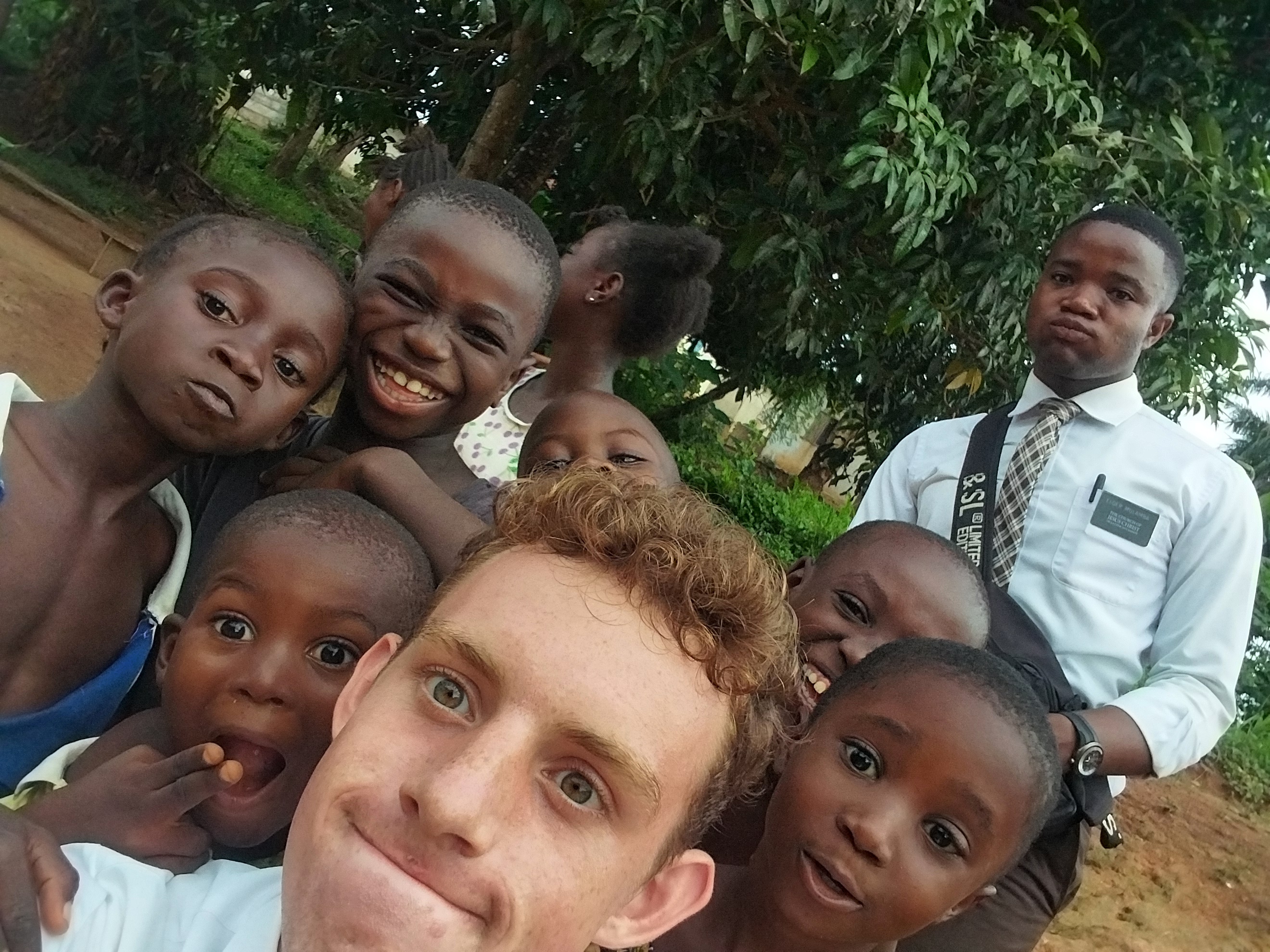
Following my graduation from high school, I went on a two year mission for my church. I lived in various places and communities in the small West African country, Sierra Leone. My experience living in Sierra Leone for two years is a big part of why I take impaired driving so seriously. It’s something that really sets me apart because most people my age haven’t lived outside the U.S., let alone somewhere where the roads are so unpredictable. Coming from Montana, where highways are wide and open, and where we have seatbelts, traffic lights, and first responders just a phone call away, I thought I knew what “dangerous driving” looked like. But Sierra Leone was like stepping into a completely different reality.
Most people there travel by motorbike, on foot, or packed into poda-podas (small vans), and the roads can be rough—muddy in the rainy season, dusty and uneven in the dry season. There aren’t many enforced traffic laws, and even when there are, not everyone follows them. I saw drivers riding long distances late at night because they needed the money, even though they were clearly exhausted. I saw distracted riders holding groceries, bags of charcoal, or even multiple passengers with no helmets. More than once, I saw the aftermath of an accident and realized how quickly things can go wrong when people aren’t fully focused.
Seeing accidents up close—without emergency medical teams, without seatbelts, without much protection at all—hit me in a way that statistics never could. These weren’t numbers on a chart; they were real people whose lives changed in seconds. Those experiences made me look at driving in America differently. We have safer cars, clearer rules, and more resources. But even with all that, tens of thousands of people still die every year. To me, that means we’re not doing enough to take impaired driving seriously.
This is where driver education and traffic safety programs really matter. The best programs don’t just hand you a rule book or make you memorize road signs. They actually explain why the rules matter. They show real examples of how accidents happen and help young drivers understand the responsibility they take on every time they turn a key. When driver’s ed includes stories, videos, and simulations that feel real—not just information on a worksheet—it sticks with people. Programs that talk about distraction, fatigue, mental health, and peer pressure are especially effective, because those issues affect us daily.
Another important part of driver’s education is helping people recognize their own limits. A lot of drivers think impairment won’t happen to them because they’re “good drivers.” But a good driver is someone who knows when not to drive. Courses that teach decision-making, not just technical skills, help create safer habits that actually make a difference in the real world.
As for my own role, I think preventing impaired driving starts with the habits I choose for myself. I can’t control the whole world, but I can control what I do. For me, that means putting my phone where I can’t reach it while I’m driving, pulling over if I’m too tired, and being honest about whether I’m focused enough to drive safely. It also means speaking up when I’m with someone who shouldn’t be driving—whether they’ve been drinking, using something, or are simply too distracted to be safe. That’s not always comfortable, but it’s necessary.
My time in Sierra Leone taught me that simple decisions can save lives. Roads are unpredictable. Conditions change fast. But responsible choices, made consistently, reduce the chances of tragedy. In Montana and everywhere else, being a safe driver isn’t just about protecting myself—it’s about protecting every person who shares the road with me.
Content Disclaimer:
Essays are contributed by users and represent their individual perspectives, not those of this website.



3 votes
An accident that made me aware that also time and impatience can be impairement
Karin Deutsch


